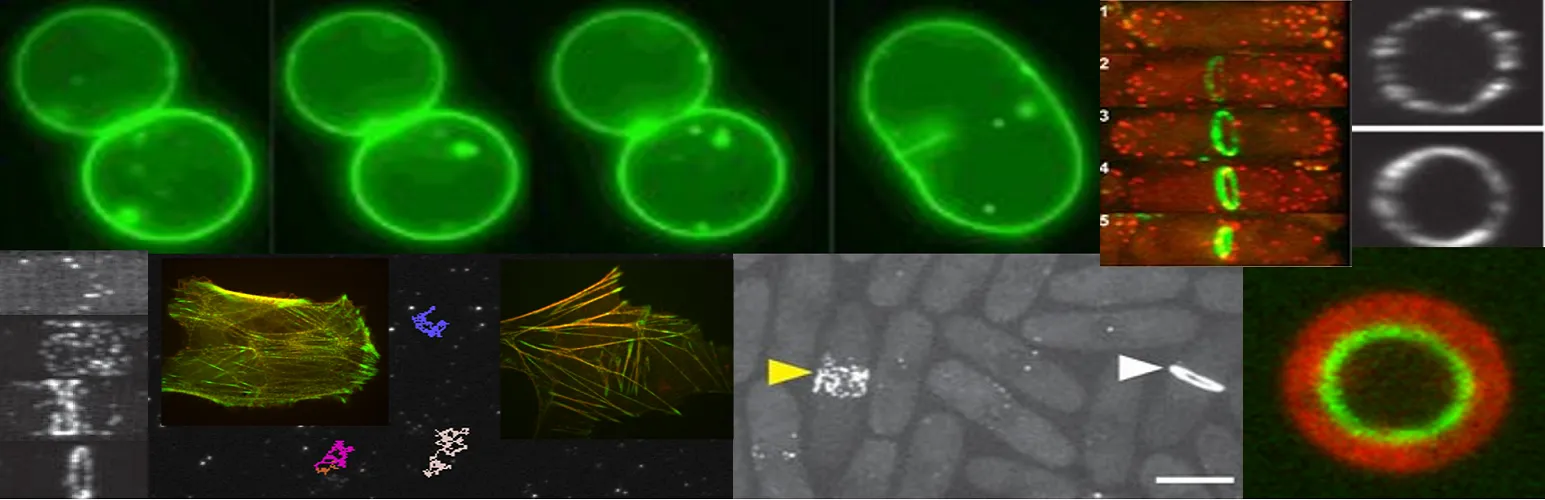
Ben O'Shaughnessy's group uses mathematical modeling, computational modeling, and machine learning methods to study embryo development, neurotransmission, exocytosis, cell division, and other fundamental processes in health and disease.
Neurotransmission, neurotransmitter release, exocytosis
We study neurotransmission and the machinery that releases neurotransmitters by exocytosis at neuronal synapses in the brain. This remarkable machinery achieves the millisecond temporal resolution required for neural circuits to encode information for cognition, sensation, and coordinated motor activity. Its misregulation is associated with neurodegenerative and neurodevelopmental disorders. Similar mechanisms govern secretion of other essential bioactive compounds, including hormones such as insulin, cytokines in the immune system and enzymes.
Development of the embryo
The programs of development transform the early embryo of a few identical cells into the complex adult organism with extraordinary robustness to stochastic variations. We use machine learning and computational analysis to investigate the mechanisms that sculpt tissue and enforce robustness. We seek mechanisms of developmental disease to motivate prevention strategies.
Mechanics of cell division, mechanosensing
We investigate one of life’s most essential force-generating machines, the actomyosin contractile ring that divides cells at the end of the cell cycle during cytokinesis. Cell division propagates the genome and allows organisms to grow and repair, and its misregulation is the essential feature of cancer. Related interests in mechanobiology are mechanosensing and remodeling in the actomyosin cytoskeleton and regulation of cell wall growth in cell walled organisms.
Recent News
Grace Fluskey has joined our group as a REU undergraduate researcher.
Welcome, Grace!
Ray Nobuhara has joined our group as an undergraduate researcher.
Welcome, Ray!
Tianyi presented her work: Actomyosin cables impart spatiotemporal resolved fluidity to regulate epithelial tissue flow during Drosophila germ-band extension at the Biophysical Society Annual Meeting 2024 held by the Biophysical Society (BPS).
Congratulations Tianyi!
Jeffrey Fedors has joined our group as an MS researcher.
Welcome, Jeffrey!
Aradhvik Tiwari has joined our group as an MS researcher.
Welcome, Aradhvik!
Christos Dimitrios Nikas has joined our group as an MS researcher.
Welcome, Christos!
Daniel Thompson has joined our group as an undergraduate researcher.
Welcome, Daniel!
Hongkang presented his work: A machine learning-driven approach for systematic quantification of in vivo cell geometries during embryo development at the Cell Bio 2023 conference held by the American society of Cell Biology (ASCB).
Congratulations, Hongkang!
Cristina presented her work: Neurotransmitter Release Relies on Coupled Calcium Sensing and Membrane Fusion at the AIChE Annual Meeting 2023 held by the American Institute of Chemical Engineers (AIChE).
Congratulations Cristina!
Dong developed a mathematical model to understand the mechanism of fusion. He also collaborated with an experimental group to investigate the phenomena of exocytosis and endocytosis.
Congratulations Dong!
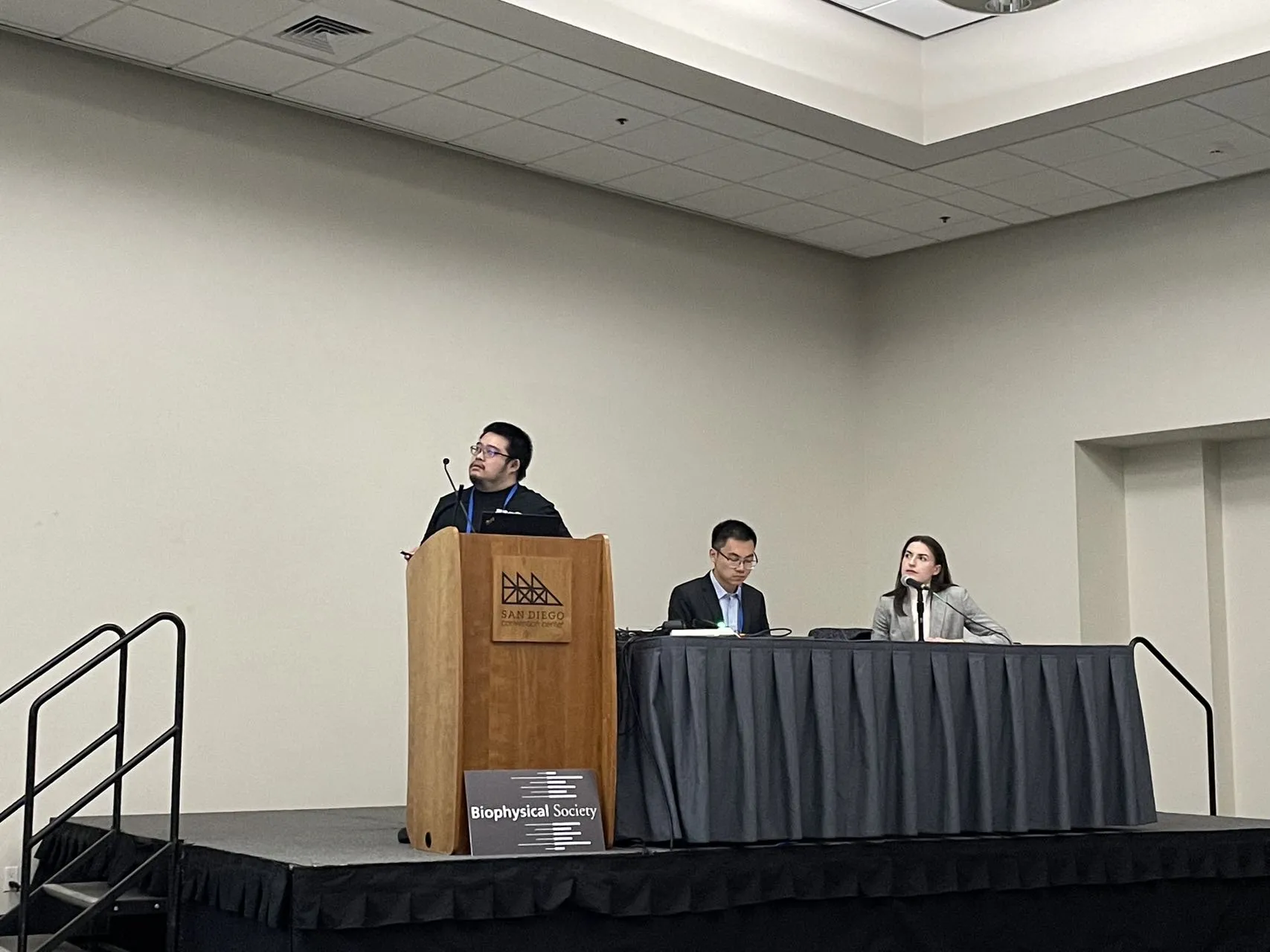
Dong presented his work: A Dynamic Mechanically Stabilized Membrane Reservoir Mediates Fast Endocytosis at the Biophysical Society Annual Meeting 2023 held by the Biophysical Society (BPS).
Cristina presented her work: Synaptotagmin is not only a Calcium Sensor, but also Exerts Entropic Forces that Drive Membrane Fusion at the Biophysical Society Annual Meeting 2023 held by the Biophysical Society (BPS).
Cristina was also invited as one of the co-chairs of the platform: Exocytosis and Endocytosis.
Congratulations Dong and Cristina!